
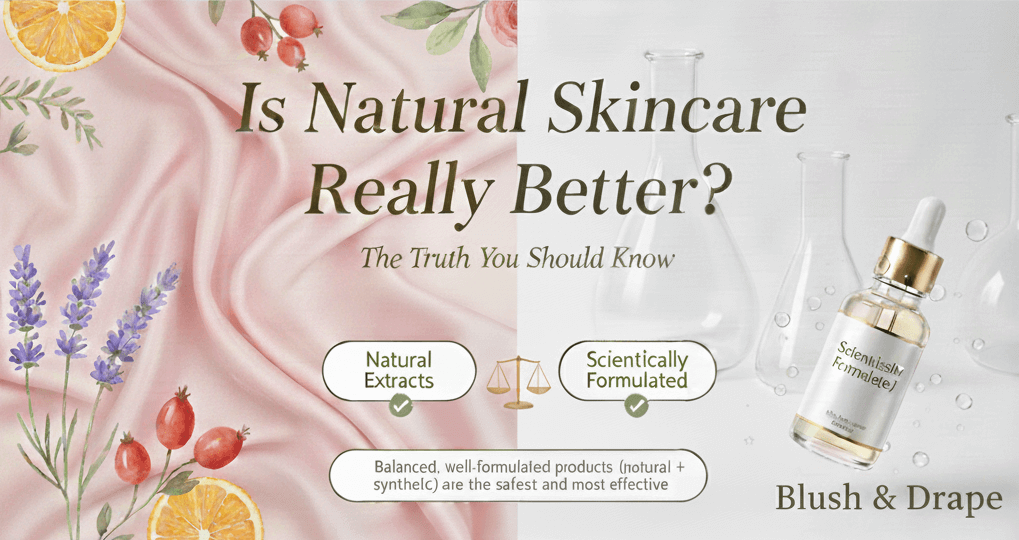
Is Natural Skincare Really Better? The Truth You Should Know
Many people think “natural = safe” in skincare.
But the truth is: natural ingredients can help or hurt your skin. It all depends on how they’re used.
Let’s make it simple.
1. What does “natural skincare” actually mean?
Natural skincare usually means using ingredients that come from plants, fruits, flowers, or herbs. It can also include DIY masks and products labeled as “organic,” “chemical-free,” or “100% natural.”
But remember: everything is made of chemicals, including air and water.
So when a brand says “chemical-free,” it’s just marketing, not science.
2. Why natural ingredients are not always safe
Not all natural ingredients are gentle. Some can actually harm your skin.
For example, lemon is natural but very acidic. It can burn your skin, damage your barrier, and cause dark spots in the sun. Essential oils are strong and concentrated, so they can easily cause redness or allergic reactions, especially on sensitive skin. DIY masks seem harmless, but without preservatives, bacteria grows quickly and can lead to acne or irritation.
So even if something is “natural,” it can still irritate your skin.
3. Why lab-made (synthetic) ingredients can be safer
“Synthetic” does not mean dangerous.
In skincare, synthetic ingredients are usually:
- Scientifically tested
- Stable and won’t spoil quickly
- Made in controlled concentrations
- Designed to be gentle and effective
They help:
- Strengthen your skin barrier
- Keep the skin hydrated
- Reduce redness and irritation
- Improve elasticity and signs of aging
- Protect your skin’s good bacteria
Many natural ingredients only become safe and effective after they’re purified and stabilized in a lab.
4. Natural ingredients that commonly cause problems
Some natural ingredients often cause irritation:
- Lemon – burns skin, causes discoloration
- Baking soda – damages skin barrier
- Essential oils – can cause rashes and irritation
- Raw honey – may contain bacteria
- Fresh aloe vera – can be too strong or contaminated
Natural does not always mean gentle.
5. Should you avoid natural skincare?
No, you don’t have to avoid it.
Natural ingredients can be great when used correctly.
Problems usually happen because of:
- Wrong concentration
- No preservatives
- Applying raw ingredients directly
- Long-term DIY use
- Thinking “natural never harms”
Balanced, well-formulated products (a mix of natural + synthetic) are usually the safest and most effective.
6. How to choose safe skincare
Instead of trusting the word “natural,” check:
→ The ingredient list
→ Your skin type
→ Patch test results
→ Whether the formula is balanced
→ If it has preservatives (for creams / serums)
→ If it supports your skin barrier
Your skin is precious. Choose what is safe, gentle, and truly good for it.
Final Thoughts
Natural skincare may sound harmless, but it can still cause irritation, infections, or barrier damage. Products that are well-formulated, natural or synthetic, are safe and healthy for your skin in the long run.
Bottom line:
Don’t buy a product just because it says “natural.”
Choose what is safe, tested, and right for your skin.
Explore our skincare collection at Blush & Drape to find safe, tested products that truly care for your skin.